Best Season to Visit Kilimanjaro
Disclaimer
Please note: Weather patterns on Mount Kilimanjaro can vary from year to year. The information below reflects typical conditions, but actual weather may differ during your climb.
While Mount Kilimanjaro is accessible year-round, your experience will vary depending on the season. The best time to climb is during the two distinct dry seasons, when trails are safer and skies are clear, creating the most spectacular views.
However, choosing to climb Kilimanjaro during the “wet” season doesn’t mean you can’t summit—it simply means selecting the right route for wetter conditions. An added benefit of trekking in the rainy season is that prices for services are often lower and the mountain is less crowded, making it an excellent option for budget-minded climbers who enjoy a quieter experience despite wetter weather.
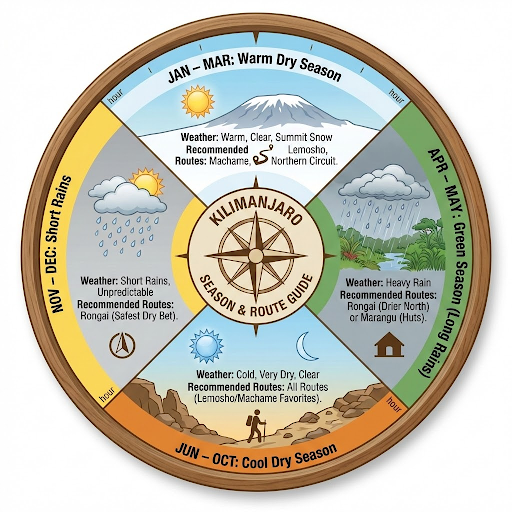
| Season | Weather Conditions | Recommended Route(s) |
|---|---|---|
| Jan – Mar | Warm, Clear, Summit Snow | Lemosho, Machame, Northern Circuit |
| Apr – May | Heavy Rain (Long Rains) | Rongai & Northern Circuit Route (Drier North side and good acclimatisation) or Marangu (Huts) |
| Jun – Oct | Cold, Very Dry, Clear | All Routes (Lemosho/Machame are favorites) |
| Nov – Dec | Short Rains / Unpredictable | Rongai (Safest bet for dry days) |
The Warm Dry Season (Mid-December to Mid-March)
This is a popular but still somewhat quieter dry season
Best For: Warmer temperatures, clearer skies, and classic snow-capped summit photos.
This period is widely considered one of the best times to climb Mount Kilimanjaro. Conditions are generally clear and warmer than most of the year, making the ascent more comfortable and visually spectacular. While occasional showers may occur in the rainforest zone, the upper slopes are typically dry and stable.
- Highlights: Incredible visibility and a high chance of seeing snow on the summit, which makes for stunning photography.
- Warmer Summit Night: This is the warmest time of year to attempt the summit. While temperatures can still drop to around -15°C, this is significantly milder than the -25°C or colder conditions often experienced in July and August—making summit night more manageable for many climbers.
- Afternoon Showers: In the lower zones (1 & 2), the heat often causes convection clouds to form by 1:00 PM. It is common to hike in sunshine all morning and get a quick shower just as you reach camp.
- The “Buffer” Months:
- Late December: You may still see the tail end of the short rains, usually as brief, isolated showers.
- Mid-March: Marks the transition toward the long rains. While conditions can still be good, bookings in late March carry a higher chance of heavier rainfall.
- Recommended Routes:
- Lemosho & Machame Routes: These scenic western routes are fantastic during this period.
- Northern Circuit: Offers extended acclimatization and great views during these clear months.
Weather Breakdown by Climate Zone
Mid-December to Mid-March
| Climate Zone | Altitude | Day Temp | Night Temp | Precipitation | Typical Weather Conditions |
|---|---|---|---|---|---|
| Cultivation | 800 m–1.8 km | ~20–30°C (68–86°F) | ~15–20°C (59–68°F) | Low–Moderate (isolated showers) | Warm and mostly sunny, with occasional short rain in the afternoons. Trails are generally dry and muddy sections are limited. |
| Rainforest | 1.8 km–2.8 km | ~18–25°C (64–77°F) | ~10–15°C (50–59°F) | Low–Moderate (light mist or drizzle) | Even in the dry season, the rainforest can be humid and slightly damp, especially in the afternoons, though rainfall is much less frequent than in the wet months. |
| Heath / Moorland | 2.8 km–4 km | ~15–20°C (59–68°F) | ~0–5°C (32–41°F) | Low | Above the cloud line most days, this zone sees minimal rain and excellent visibility under mostly clear skies. |
| Alpine Desert | 4 km–5 km | ~10–15°C (50–59°F) | ~-5–0°C (23–32°F) | Very Low | Dry and arid conditions prevail, with excellent views and little precipitation. UV exposure increases, but rain is rare. |
| Arctic (Summit) | 5 km+ | ~-5 to -10°C (14–23°F) | ~-15 to -25°C (5 to -13°F) | Very Low (snow) | Extremely cold, with most precipitation falling as snow if it occurs. Skies are often very clear, offering spectacular summit views. |
The Cool Dry Season (June to October)
This is the main climbing season. It coincides with summer holidays in Europe and North America, making it a popular time to trek. The weather is colder than in January—especially at night—but it is also the driest period of the year.
Best For: Crisp air, exceptionally clear views, and classic trekking conditions.
The cool dry season from June to October is regarded as one of the best times to climb Mount Kilimanjaro. During these months, rainfall is minimal and skies are generally clear, offering superb visibility across the mountain’s climate zones and panoramic views of the surrounding plains. The consistently dry conditions significantly improve trail reliability and summit success rates.
Highlights:
- Great visibility — clear skies and bright sunshine make for stunning views and excellent photography.
- Stable weather — with minimal precipitation and less cloud cover, conditions on the trails tend to be more predictable.
Cooler Temperatures:
As the name suggests, this season brings cooler conditions compared to the warm dry season. Days are often comfortable in the lower zones, while nights — especially above 4,000 m — can be quite cold. Summit night temperatures commonly dip well below freezing, so warm layers and a good sleeping bag are essential.
Crowds Peak in Mid-Season:
Because this dry period coincides with summer holidays in many regions, July and August are especially busy on popular routes like Lemosho and Machame. If you prefer slightly fewer people but still want excellent weather, consider the less crowded routes (Northern Circuit Route , Rongai Route, Umbwe Route) and/or booking for September or early October.
Insider Tip: How to Beat the Crowds on Any Route: If you have your heart set on the scenic Lemosho Route or the iconic Machame Route but hate crowds, there is a trick: Avoid the Weekend Start.
- Most groups start their climb on a Saturday or Sunday.
- If you can start your trek on a Tuesday or Wednesday, you will often find yourself “in between” the massive waves of climbers, enjoying a much quieter trail even on a popular route.
Recommended Routes:
- Lemosho & Machame Routes: These scenic western trails shine in dry conditions, with spectacular vistas and reliable footing.
Northern Circuit: Offers extended acclimatisation and wide-ranging views during these cool months.
Weather Breakdown by Climate Zone
June to October
| Climate Zone | Altitude | Day Temp | Night Temp | Precipitation | Typical Weather Conditions |
|---|---|---|---|---|---|
| Cultivation | 800 m–1.8 km | ~18–25°C (64–77°F) | ~10–15°C (50–59°F) | Very Low | Dry and mild with clear mornings and minimal rain — perfect lower trekking conditions. |
| Rainforest | 1.8 km–2.8 km | ~15–22°C (59–72°F) | ~5–10°C (41–50°F) | Low | Rain is rare in this season; trails are generally drier though the forest can still feel humid. |
| Heath / Moorland | 2.8 km–4 km | ~10–18°C (50–64°F) | ~0–5°C (32–41°F) | Very Low | Above the clouds most days — mostly dry, excellent visibility, and comfortable trekking conditions. |
| Alpine Desert | 4 km–5 km | ~5–12°C (41–54°F) | ~-5 to 0°C (23–32°F) | Very Low | Clear, dry, and arid with little precipitation; UV exposure strong under sunshine. |
| Arctic (Summit) | 5 km+ | ~-5 to -10°C (14–23°F) | ~-15 to -25°C (5 to -13°F) | Very Low (snow possible) | Extremely cold, with any precipitation likely falling as snow — summit views are crisp and clear. |
Short Rains Season (November-December)
For many climbers, this is a fantastic “secret season.” The mountain is incredibly quiet before the Christmas crowds arrive, and the skies—often washed clean by afternoon showers—can offer some of the crispest visibility of the year.
Best For: Adventurous trekkers, photographers chasing dramatic skies, and those seeking solitude before the holiday rush.
This period is known as the “Short Rains.” Unlike the heavy, continuous rains of April and May, the weather during this time is much more unpredictable. You might experience bright, sunny mornings followed by short, sharp thunderstorms in the late afternoon.
Highlights:
- Dramatic Photography: The interplay between dark storm clouds and bright sunshine creates some of the most spectacular lighting conditions on the mountain. The sunsets during this season are legendary.
- Solitude: This is one of the quietest times on the mountain. You can enjoy the popular routes without the “traffic jams” seen in August or late December.
- Lush Scenery: The lower slopes begin to turn green again after the dry season, and the dust settles, making the air fresh and clear.
- Lower trail traffic: Short rains are a quieter period on Kilimanjaro, with far fewer climbers on the trails compared with the peak dry seasons.
Variable conditions: As with any shoulder season, weather can be unpredictable — some days may be mostly dry, while others see heavier showers. - Afternoon showers are common: Rain tends to fall more frequently in the afternoons and evenings during November and December, especially at lower elevations.
Milder morning weather: Mornings in this season are often mild and can be quite pleasant for trekking before rains build later in the day.
Important Considerations:
- Afternoon Showers: The pattern is typically: clear mornings, cloud build-up by noon, and rain in the afternoon. Early starts are recommended to reach camp before the rain begins.
- Muddy Lower Slopes: The rainforest zone can get muddy, so good boots and gaiters are essential.
- Variable Summit Conditions: Snow is possible on the summit, which adds to the beauty but requires warm, waterproof layers.
Recommended Routes:
- Top Recommendation: The Rongai Route. Just like in the main rainy season, the northern slopes (Rongai) are significantly drier than the south. This route offers the highest chance of keeping your gear dry.
- Alternative: The Northern Circuit. This route spends much of its time on the northern traverse, avoiding the wetter southern rainforests for the middle days of the trek.
Weather Breakdown by Climate Zone
November to December
| Climate Zone | Altitude | Day Temp | Night Temp | Precipitation | Typical Weather Conditions |
|---|---|---|---|---|---|
| Cultivation | 800 m–1.8 km | ~18–28°C (64–82°F) | ~12–18°C (54–64°F) | Moderate–High | Warm and humid with occasional to frequent showers, especially in the afternoon and evening. Lower trails can be wet and muddy. |
| Rainforest | 1.8 km–2.8 km | ~17–24°C (63–75°F) | ~8–14°C (46–57°F) | High | Rainfall and cloud cover increase; expect intermittent rain and mist throughout the day. |
| Heath / Moorland | 2.8 km–4 km | ~11–18°C (52–64°F) | ~0–6°C (32–43°F) | Moderate | Showers are possible, though less intense than in the rainforest. Mornings can still offer good visibility. |
| Alpine Desert | 4 km–5 km | ~6–12°C (43–54°F) | ~-5–0°C (23–32°F) | Low–Moderate | Generally drier than lower zones, though occasional precipitation is possible, especially cloud-driven showers at high altitude. |
| Arctic (Summit) | 5 km+ | ~-5 to -10°C (14–23°F) | ~-15 to -25°C (5 to -13°F) | Low (snow/sleet) | Very cold with only occasional precipitation, typically as snow or sleet. Clear breaks possible, but summit weather can still be unpredictable. |
The Green Season (April–May)
Best For: Solitude adventurers, budget-savvy climbers, photographers and anyone who loves lush landscapes and a quieter mountain experience.
Although April and May are part of Kilimanjaro’s long rainy season — when trails are wetter and slippier, and weather less predictable — this period also offers a unique and rewarding climbing experience. It’s a time when the mountain is at its most vibrant and peaceful, and when climbers seeking solitude and a distinctive journey choose to go.
Rainy Season — But Also Green and Serene
Rainfall is more frequent during April and May, especially on the southern and western slopes, and trails can be muddier than in dry months. However, if you’re well prepared with waterproof gear and the right mindset, you can still enjoy an unforgettable trek. The landscape during this time becomes lush and green, with vibrant foliage and dramatic skies, making for beautiful photography and a very different Kilimanjaro experience compared with the dry seasons.
Highlights of the Green Season
- Quiet Trails & Camps: With far fewer climbers on the mountain, you’ll enjoy a more personal and peaceful journey — often with whole campsites to yourself.
- Lower Prices: We offer reduced pricing in April and May — a major perk for budget-minded adventurers.
- Vibrant Scenery: The rains bring out rich greens, flowing streams, and dramatic cloudscapes — a compelling contrast to the drier months.
Who Should Consider Climbing Now. This season is especially appealing to:
- Experienced trekkers who don’t mind wetter terrain
- Solitude travellers seeking a more introspective, less crowded climb
- Photographers and nature lovers who cherish lush scenery
Tips for a Successful Green Season Trek
- Bring reliable waterproof multi-layer gear (jackets, gaiters, covers for packs and boots).
- Choose routes that are less affected by heavy mud and rain when possible.
- Enjoy the bonus of quiet campsites — often a peaceful highlight of this season.
Recommended Routes
- Top Recommendation: The Rongai Route
- Why? The Rongai route approaches Kilimanjaro from the North, which sits in the mountain’s “rain shadow.” This side receives significantly less rainfall than the southern slopes (Machame/Lemosho). Even when it is pouring on the rest of the mountain, the Rongai route often remains surprisingly dry.
- Alternatives:
- The Marangu Route. Why? This is the only route that offers hut accommodation. While you will still hike in the rain, you can sleep in dry, A-frame huts at night rather than wet tents, which can be a huge morale booster in wet weather.
- Northern Circuit Route: Why? Generally less rainfall on the North side. Offers excellent acclimatization and still delivers wide-ranging views, even in green season conditions.
Typical Conditions
- Quiet Trails: Because most climbers avoid this period, you’ll find far fewer people on the mountain. This can be a big plus for those seeking solitude or wanting a more personal trekking experience.
- Rain and Mud: April and May are usually the wettest months on Kilimanjaro, with frequent rains that can make trails muddy and slippery — especially in the rainforest and heath zones.
- Limited Visibility: Heavy cloud cover and rain can reduce visibility throughout much of the trek, sometimes obscuring views you’d expect during a clearer season.
- Challenging Conditions: Wet weather increases the physical challenge — trails can be slippery, particularly in the rainforest and moorland zones — so good waterproof gear and careful pacing are essential.
Weather Breakdown by Climate Zone
April to May
| Climate Zone | Altitude | Day Temp | Night Temp | Precipitation | Rain / Weather Conditions |
|---|---|---|---|---|---|
| Cultivation | 800 m–1.8 km | ~15–25°C (59–77°F) | ~10–15°C (50–59°F) | High (frequent rain showers, heavy at times) | Very wet and humid — expect frequent rain and muddy trails. Rain tends to be strongest here compared with higher zones. |
| Rainforest | 1.8 km–2.8 km | ~15–22°C (59–72°F) | ~5–10°C (41–50°F) | Very High (persistent rain / showers) | Heavy rain and cloud cover dominate — often wet throughout the day, with mist and slippery terrain. |
| Heath / Moorland | 2.8 km–4 km | ~10–18°C (50–64°F) | ~0–5°C (32–41°F) | Moderate–High (showers common) | Still damp and cloudy; rain less intense than lower zones, though showers still likely. |
| Alpine Desert | 4 km–5 km | ~5–12°C (41–54°F) | ~-5–0°C (23–32°F) | Low–Moderate (less frequent, lighter) | Cooler and drier than lower zones, though occasional sleet or rain is possible; cloud cover common. |
| Arctic (Summit) | 5 km+ | ~-5 to -10°C (14–23°F) | ~-15 to -25°C (5 to -13°F) | Low (snow/sleet) | Very cold; most precipitation falls as snow/sleet when it occurs. Precipitation here is lower overall than on the lower slopes. |
Climate Zones of Kilimanjaro & Wildlife
Responsible Trekking Note: While our guides love showing you the local wildlife, please remember:
- Keep your distance. Do not approach monkeys or other animals.
- Do not feed the wildlife. This includes the Ravens at camp and the Mice.
- Leave no trace. We adhere to a strict “Pack In, Pack Out” policy to protect the ecosystem. We remove 100% of our waste, and we deeply appreciate climbers who join us in stewardship by collecting any litter they find along the trail.
While Kilimanjaro is not a traditional “safari” destination like the Serengeti (you likely won’t see lions or zebras), the mountain is teeming with life if you are quiet, patient and know where to look.
While the summit may seem barren, the slopes of Kilimanjaro hide secrets for those with a keen eye. If you spot a larger animal, it will likely be one of the mountain’s shy residents: a Grey or Red Duiker, a Bushbuck, or perhaps a majestic Eland standing guard in the moorland. But the true ghosts of the mountain are the ‘day-trippers’—Buffalo, Giraffe, and even the elusive Leopard—who occasionally wander up from the savannah. While sightings are rare, your best chance to spot these giants is on the Shira Plateau or the wild northern slopes of the Rongai Route near Kikelelwa Camp.
The Five Ecological Zones of Kilimanjaro
Kilimanjaro is an ecological vertical island trapping clouds and creating micro-climates that support species found nowhere else on Earth.
As you climb from the tropical base to the frozen summit, you will walk through five distinct ecosystems. This rapid change in altitude creates unique habitats for a variety of plants and animals.
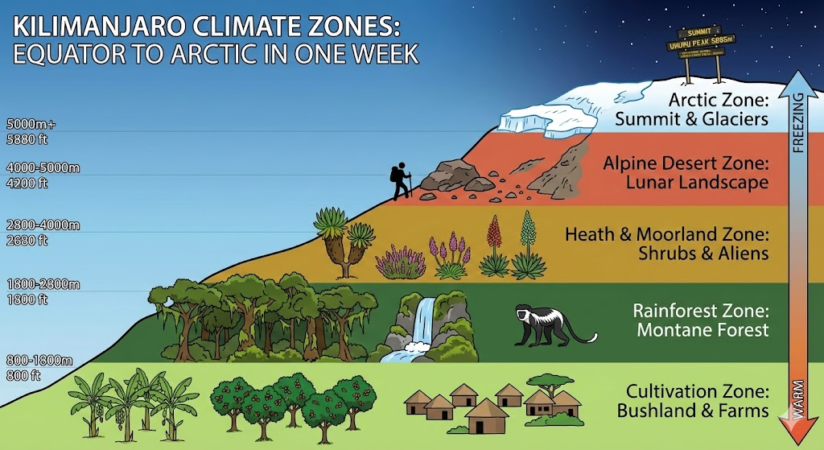
The Cultivation Zone (800m – 1,800m)
The Human Footprint Before you enter the National Park, you will drive through the lower slopes. This area is lush and fertile, dominated by the Chagga people’s “home gardens.”
- Landscape: Coffee farms, banana plantations, and patches of riverine forest.
- Wildlife: While mostly inhabited by humans, this zone attracts smaller wildlife. Look out for Galagos (Bushbabies) at night and the occasional Blue Monkey near the forest edge.
Birdlife: A birdwatcher’s paradise. Keep an eye out for the noisy Silvery-cheeked Hornbill and various sunbirds.
The Rainforest Zone (1,800m – 2,800m)
The Green Lung of the Mountain
This zone is a dense, prehistoric jungle. It is home to the highest concentration of life on the mountain.
🌿 Plants & Trees to Spot:
- Impatiens kilimanjari: This is the “Icon of Kilimanjaro.” It is a small, dazzlingly bright red and yellow flower that looks like an orchid. It is endemic, meaning it grows only on the slopes of Kilimanjaro and nowhere else in the world.
- East African Camphorwood: Massive, ancient trees that form the upper canopy.
- Tree Ferns (Cyathea manniana): These giant ferns can grow up to 5 meters tall, giving the forest a “Jurassic Park” feel.
- Old Man’s Beard (Usnea): Not a plant, but a lichen that hangs in ghostly grey curtains from the tree branches, feeding on the clean moisture in the air.
The Wildlife Hotspot This is where the true adventure begins. The montane forest is dense, humid, and dripping with moss (Old Man’s Beard). This zone holds 90% of the mountain’s animal population.
- The Stars of the Show:
- Black-and-White Colobus Monkeys: Famous for their long, flowing white tails and “mantles.” They spend their time high in the canopy and are unique to this region.
- Blue Monkeys: More curious and often seen closer to the ground or near Big Tree Camp (Lemosho) and Mandara Huts (Marangu).
- Elusive Giants: The forest is home to Leopards, Elephants, and Cape Buffalo, though they are incredibly shy and rarely seen by trekkers. You are more likely to see their tracks or droppings on the Rongai or Lemosho routes.
- Vegetation: Massive Camphor trees, figs, and tree ferns create a prehistoric feel.
🐦 Birdlife:
- Hartlaub’s Turaco: A stunning bird with dark green/blue feathers and bright crimson wings (visible when it flies). Listen for its raspy, barking call.
- Silvery-cheeked Hornbill: A large, loud bird with a massive cream-colored casque on its beak. You will often hear their heavy wings “whooshing” overhead.
🦋 Insects:
- African Swallowtail Butterfly: One of the largest butterflies in Africa, often seen fluttering near damp patches on the trail.
- Safari Ants (Siafu): Watch your step! These ants move in massive columns across the path. They are aggressive if stepped on, so step over the line quickly.
The Heath & Moorland Zone (2,800m – 4,000m)
The Alien Garden As you break out of the forest, the trees disappear. The landscape opens up into a shrub-land that feels like the Scottish Highlands, but with “alien” plants.
- Iconic Flora:
- Giant Groundsel (Dendrosenecio kilimanjari): These are the most famous plants on the mountain. They look like burnt cacti topped with a cabbage. They can live for centuries and grow up to 5 meters tall.
- Giant Lobelias: Large, rosette-shaped plants that close up at night to protect their core from freezing.
- Protea kilimandscharica: A woody shrub with beautiful, artichoke-like flowers. It is the first plant to recover after natural wildfires.
- Everlasting Flowers (Helichrysum): Small, dry, yellow or white flowers that feel like paper. They are incredibly hardy and bloom year-round.
- Wildlife:
- Four-Striped Grass Mouse: You will frequently see these scurrying around the camps (especially Horombo and Shira).
- Rock Hyrax: Looking like a jagged guinea pig, these are actually the closest living genetic relative to the elephant! They love sunbathing on the rocks.
- Birdlife:
- Malachite Sunbird, a stunning metallic-green bird that feeds on the nectar of the Giant Lobelias.
- Alpine Chat: A friendly, robin-sized bird that often hops around camp looking for crumbs
- 🦋 Insects:
- Four-Striped Grass Mouse: While not an insect, this is the most common creature you will see here. They are famously bold and will scurry around your boots at lunch stops.
The Alpine Desert Zone (4,000m – 5,000m)
The High-Altitude Survivors. Here, life struggles to survive. The conditions are too harsh for most plants and animals. The landscape is dominated by volcanic rock, dust, and extreme solar radiation.
Here, the struggle for life is intense. Plants must survive freezing nights, scorching sun, and almost no water.
- Wildlife: Very little lives here permanently. However, you will almost certainly meet the White-Necked Raven.
- The Ravens: These large, intelligent birds are famous on Kilimanjaro. They are scavengers that hang around high camps (like Kibo and Barafu) hoping for food scraps.
- Note: Please do not feed them; human food is bad for their health.
- Vegetation 🌿:
- Hardy Lichens: Bright orange and white patches on the rocks. These grow incredibly slowly—sometimes just 0.5mm per year.
- Tussock Grass: Clumps of coarse, yellow grass that provide the only shelter for small insects.
- 🐦 Birdlife:
- White-Necked Raven: The King of the Camps. These large, intelligent birds (black with a white patch on the neck) are famous for unzipping unattended backpacks!
- Bearded Vulture (Lammergeier): Rare but magnificent. If you are lucky, you might see one soaring on the thermals high above the saddle.
- 🕷️ The High Altitude Resident:
- The Kilimanjaro Salticid Spider: This jumping spider lives at altitudes up to 5,500m! It survives by hiding in the rocks and feeding on frozen flies that the wind blows up from the rainforest below.
The Arctic Zone (5,000m+)
The Frozen Peak On the summit, oxygen levels are roughly 50% of sea level. There is no surface water, only ice and rock.
- Life: Technically, this is an “aeolian” zone (life carried by wind). You might spot a frozen spider or insect blown up from below, but nothing lives here.
- The View: The focus here is on the Glaciers. The massive ice walls (such as the Furtwängler Glacier) are remnants of the last Ice Age and are a stark, beautiful contrast to the black volcanic crater.
Wildlife Checklist: What Might You See?
| Animal | Probability of Sighting | Best Zone |
|---|---|---|
| Blue Monkey | ⭐⭐⭐⭐⭐ High | Rainforest |
| Black & White Colobus Monkey | ⭐⭐⭐⭐ High | Rainforest |
| White-Necked Raven | ⭐⭐⭐⭐⭐ High | Alpine Desert |
| Four-Striped Grass Mouse | ⭐⭐⭐⭐⭐ High | Heath & Moorland |
| Rock Hyrax | ⭐⭐ Low–Medium | Moorland (rocky areas) |
| Chameleon | ⭐⭐ Medium | Rainforest (look closely!) |
| Duiker (Small Antelope) | ⭐ Low | Rainforest |
| Buffalo / Elephant | ⭐ Very Low | North & West Rainforest |
| Leopard | 🌑 Extremely Rare | Rainforest |