Climb Kilimanjaro via
Lemosho Route
The most scenic and successful route
to the Roof of Africa
Why Choose the Lemosho Route- Kilimanjaro’s Most Scenic Trail?
The Lemosho Route is one of the most beautiful and least crowded trails leading to the summit of Mount Kilimanjaro (5,895m). Beginning on the western slopes, the path winds through untouched rainforest, across the expansive Shira Plateau, and up toward Uhuru Peak, offering some of the best panoramic views on the mountain.With its gradual ascent profile, Lemosho provides excellent acclimatization and a high summit success rate, making it a top choice for trekkers seeking both challenge and tranquility on their way to the Roof of Africa.Route Highlights
- Duration: 7–8 days (8 recommended for better acclimatization)
- Total Distance: ~70 km (43.5 miles)
- Difficulty: Moderate to challenging
- Accommodation: Camping only (no huts)
- Scenery: Rainforest, moorland, alpine desert, glaciers
- Crowds: Low for the first two days, moderate after joining Machame Route
- Maximum Elevation: 5,895m (Uhuru Peak)
- Summit Success Rate: 85–90% (8-day), 75–80% (7-day)
Why Trekkers Love It
The Lemosho Route offers a perfect balance between scenic beauty, comfort, and acclimatization. Its peaceful first days allow you to fully immerse yourself in nature before joining the busier summit trails.From lush forests to sweeping alpine vistas, every day reveals a new side of Kilimanjaro’s diverse ecosystem. Ideal for those who want a less crowded, visually stunning, and highly rewarding climb to the Roof of Africa.8 Days Lemosho Route Itinerary
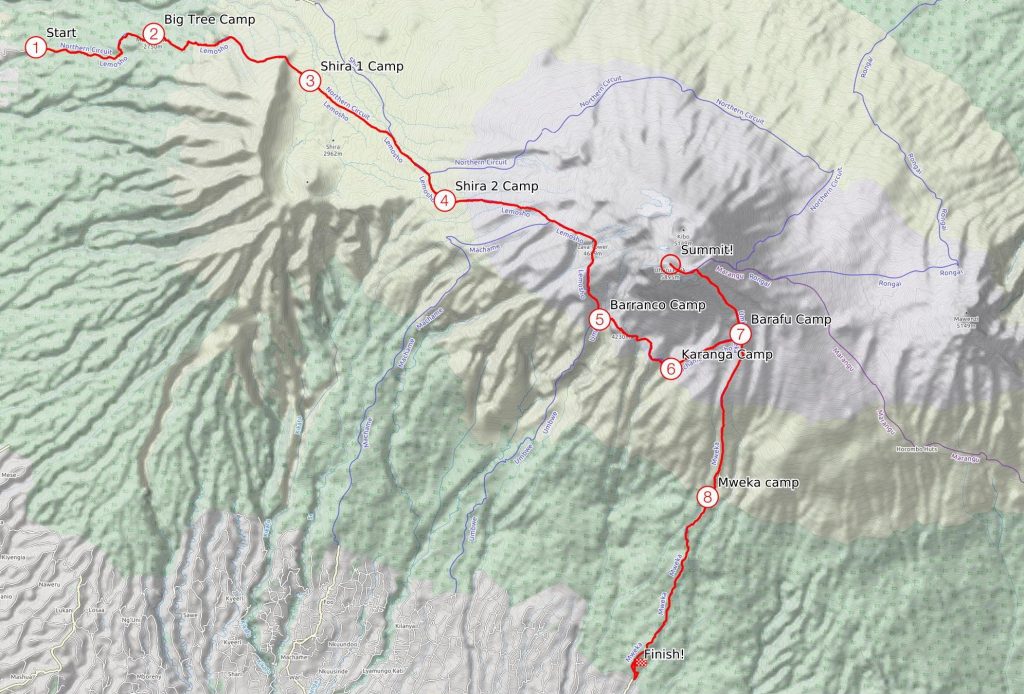
All Kilimanjaro itineraries are fully customizable.
Daily schedules can be adjusted based on your group’s acclimatisation, physical condition, oxygen levels, and pace.
Your safety and comfort are our top priority, and our experienced guides may modify the route at any time to ensure a responsible and successful summit.
🗓️ Day 1
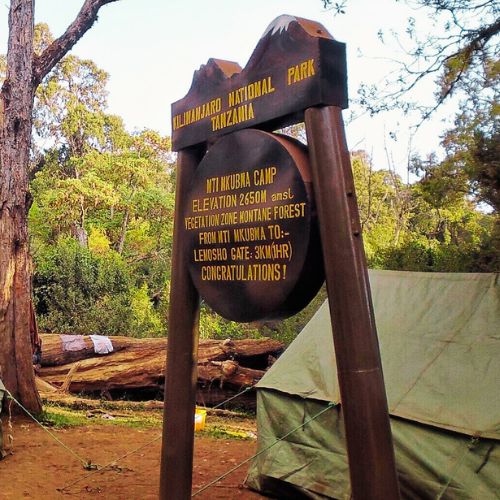
📍 Moshi → Londorossi Gate → Mti Mkubwa Camp
🏔️ Elevation: 2,100m → 2,820m
🚶 Distance: ~6 km
⏱️ Time: 3–4 hours
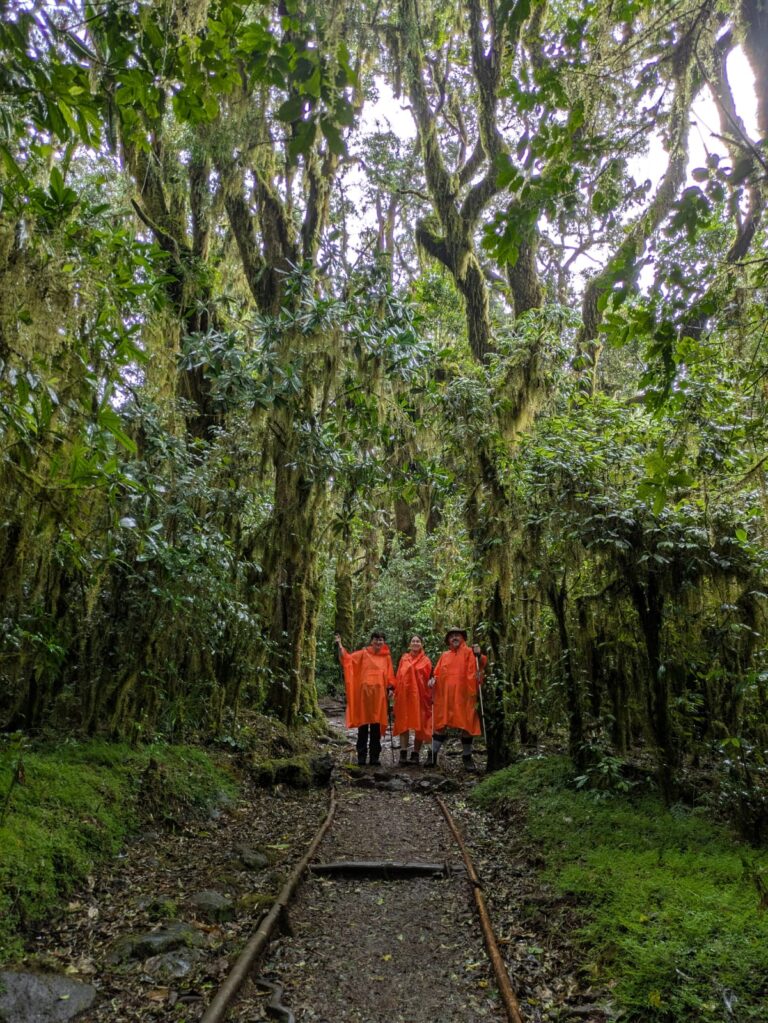
🌿 Highlight: Rainforest & Colobus Monkeys
📜 After an early breakfast in Moshi, we drive westwards to Londorossi Gate for registration and permits. Once formalities are complete, the trek begins through pristine rainforest. The trail is rich with wildlife — you may spot black-and-white Colobus monkeys, blue monkeys, and exotic birds. The hike is gentle and scenic, leading to Mti Mkubwa (“Big Tree”) Camp, your first overnight stop in the forest.
🗓️ Day 2
📍 Mti Mkubwa Camp → Shira 1 Camp
🏔️ Elevation: 2,820m → 3,500m
🚶 Distance: ~8 km
⏱️ Time: 5–6 hours
🌄 Highlight: Moorland Views & Shira Plateau
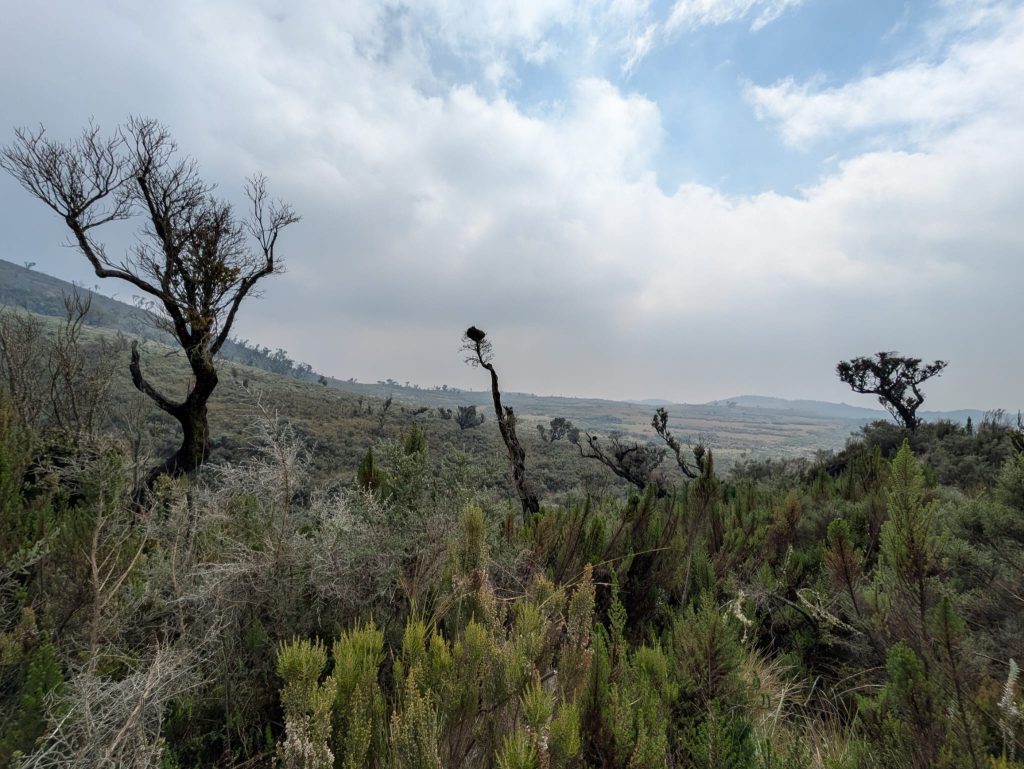
📜 Today the forest gives way to moorland and heather. The trail ascends steadily through ridges and volcanic rock formations. As you gain altitude, the vegetation becomes sparse, offering your first sweeping views of the Shira Plateau and Kilimanjaro’s glacier-capped summit in the distance. You’ll camp at Shira 1 under a sky full of stars.
🗓️ Day 3
📍 Shira 1 Camp → Shira 2 Camp
🏔️ Elevation: 3,500m → 3,900m
🚶 Distance: ~7 km
⏱️ Time: 3–4 hours
🌌 Highlight: Kibo Peak Views
📜 A shorter day to aid acclimatization, you’ll cross the Shira Plateau, one of the highest alpine plateaus in the world. The trail is relatively flat but offers breathtaking views of Mount Meru behind and Kibo Peak ahead. By afternoon, you’ll arrive at Shira 2 Camp, where you’ll join climbers from the Machame Route.
🗓️ Day 4
📍 Shira 2 Camp → Lava Tower → Barranco Camp
🏔️ Elevation: 3,900m → 4,630m → 3,960m
🚶 Distance: ~10 km
⏱️ Time: 7–8 hours
🏔️ Highlight: Acclimatization at Lava Tower
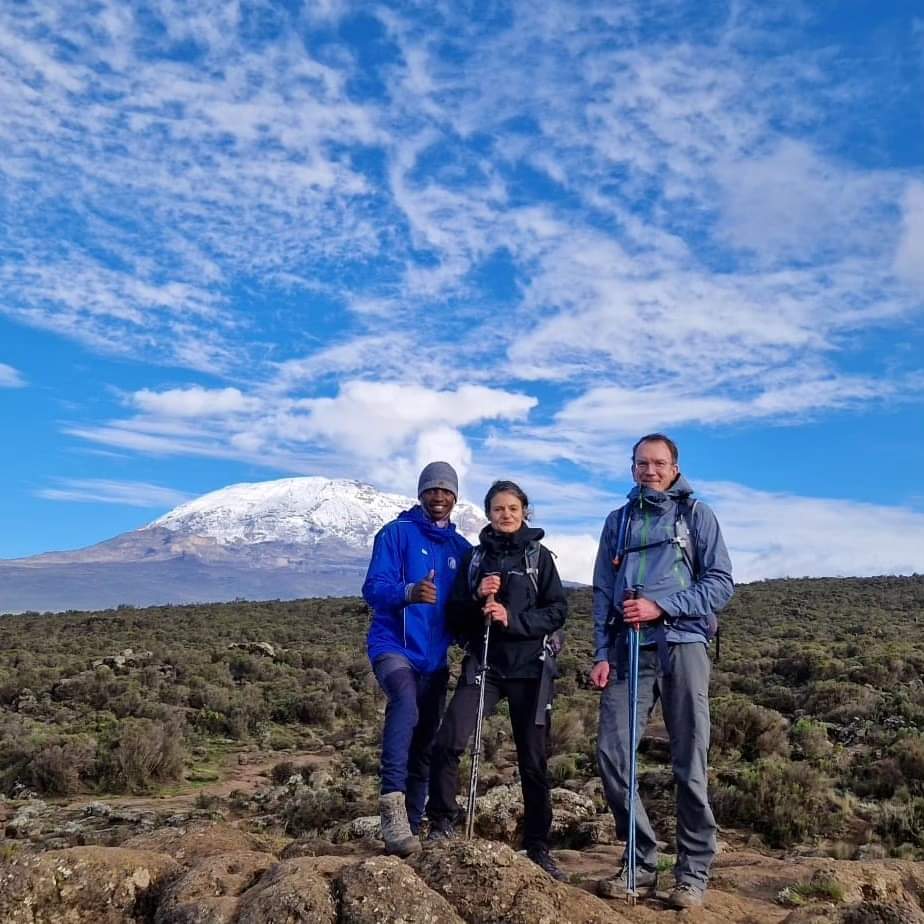
📜 This is a key acclimatization day. You’ll ascend to Lava Tower (4,630m), where you’ll have lunch in the high alpine desert. Then, you descend to Barranco Camp, following the “climb high, sleep low” principle that enhances your body’s adjustment to altitude. Barranco is located in a spectacular valley below the famous Barranco Wall.
🗓️ Day 5
📍 Barranco Camp → Karanga Camp
🏔️ Elevation: 3,960m → 4,035m
🚶 Distance: ~5 km
⏱️ Time: 4–5 hours
🧗 Highlight: Barranco Wall Climb
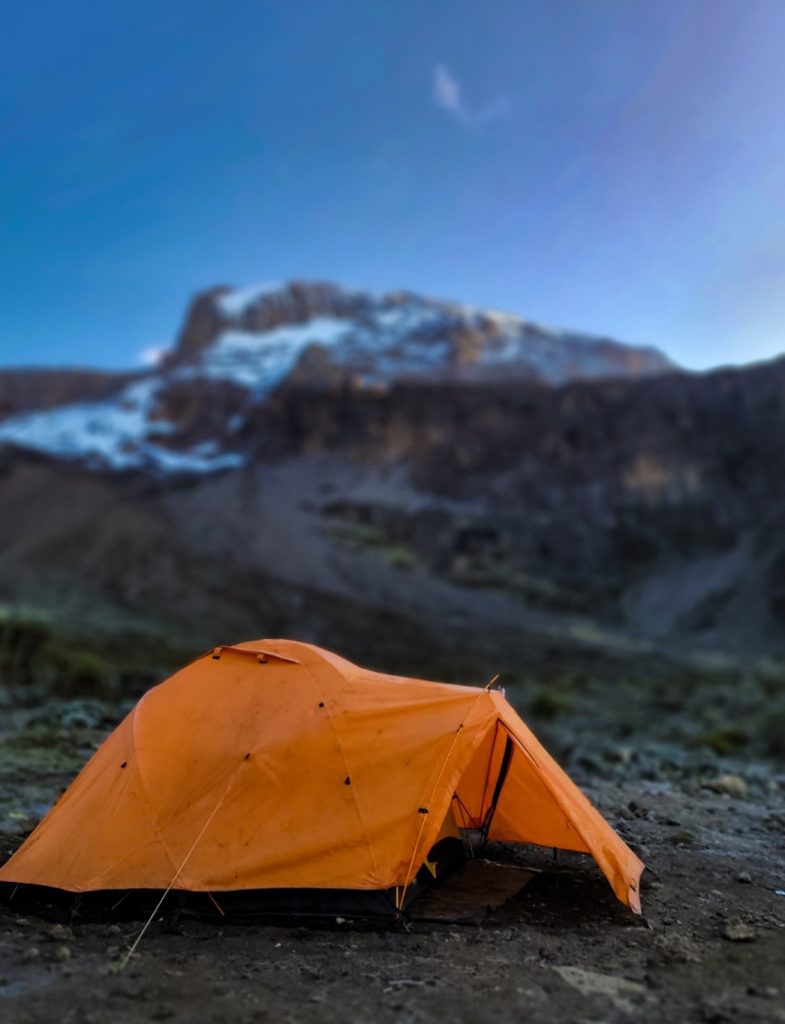
📜 Today begins with the exhilarating scramble up the Barranco Wall — a steep but non-technical climb with epic views. After reaching the top, you continue along ridges and valleys to Karanga Camp. This short but strategic day allows for added acclimatization and rest before the summit push.
🗓️ Day 6
📍 Karanga Camp → Barafu Camp
🏔️ Elevation: 4,035m → 4,673m
🚶 Distance: ~4 km
⏱️ Time: 4–5 hours
❄️ Highlight: Alpine Desert Scenery
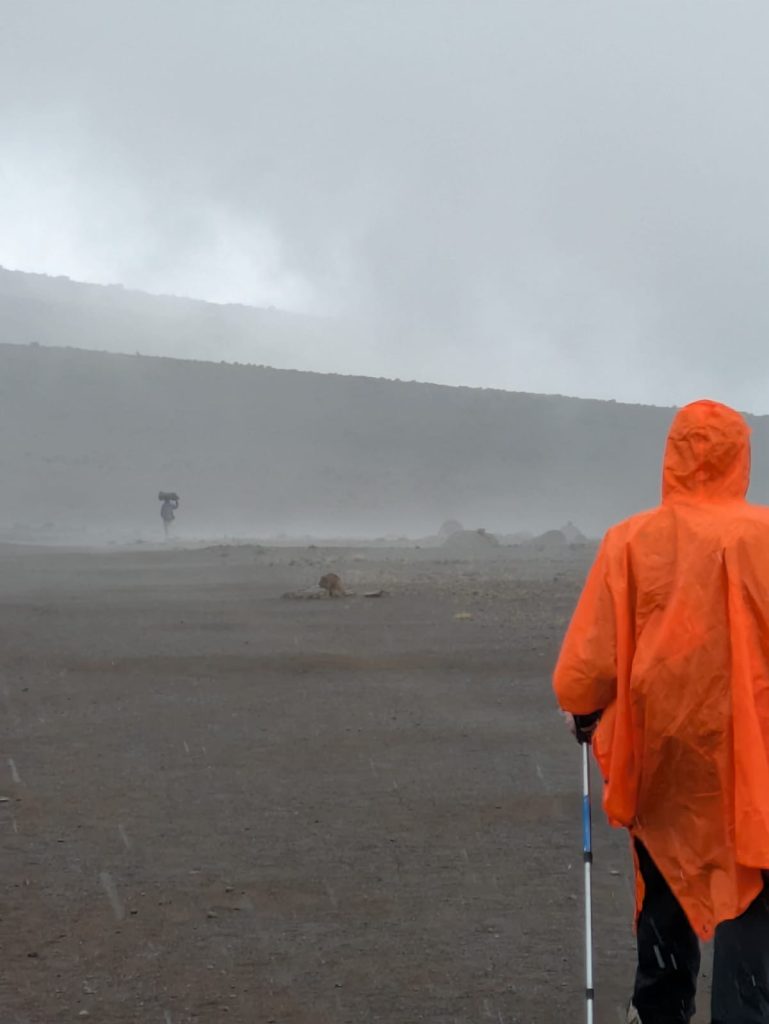
📜 A steep climb takes you through barren alpine desert to Barafu Camp, the final base before the summit. You’ll arrive by early afternoon to rest, eat, and prepare your gear. Early sleep is crucial, as the summit attempt begins around midnight.
🗓️ Day 7
📍 Barafu Camp → Stella Point → Uhuru Peak → Mweka Camp
🏔️ Elevation: 4,673m → 5,895m → 3,100m
🚶 Distance: ~17 km
⏱️ Time: 12–16 hours
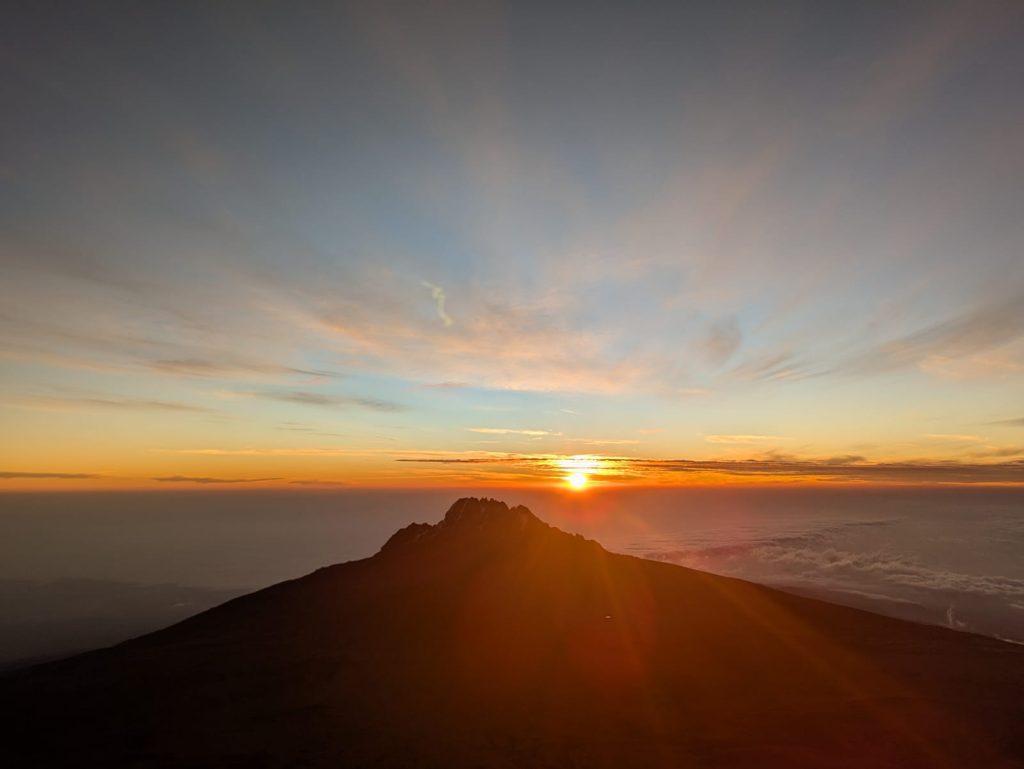
🌄 Highlight: Summit at Sunrise!
📜 Your summit push begins just after midnight. You’ll hike by headlamp through the cold, star-lit night, reaching Stella Point at sunrise and continuing along the crater rim to Uhuru Peak — the highest point in Africa. After celebrating, you descend to Barafu for a short rest and continue to Mweka Camp for your final night on the mountain.
🏔️ Elevation: 3,100m → 1,640m
🚶 Distance: ~10 km
⏱️ Time: 3–5 hours
🌳 Highlight: Final Descent Through Rainforest
📜 A gentle descent through the rainforest brings you to Mweka Gate, where you’ll receive your official summit certificate. After saying goodbye to your mountain crew, a vehicle will transfer you back to Moshi for a well-earned rest and celebration.
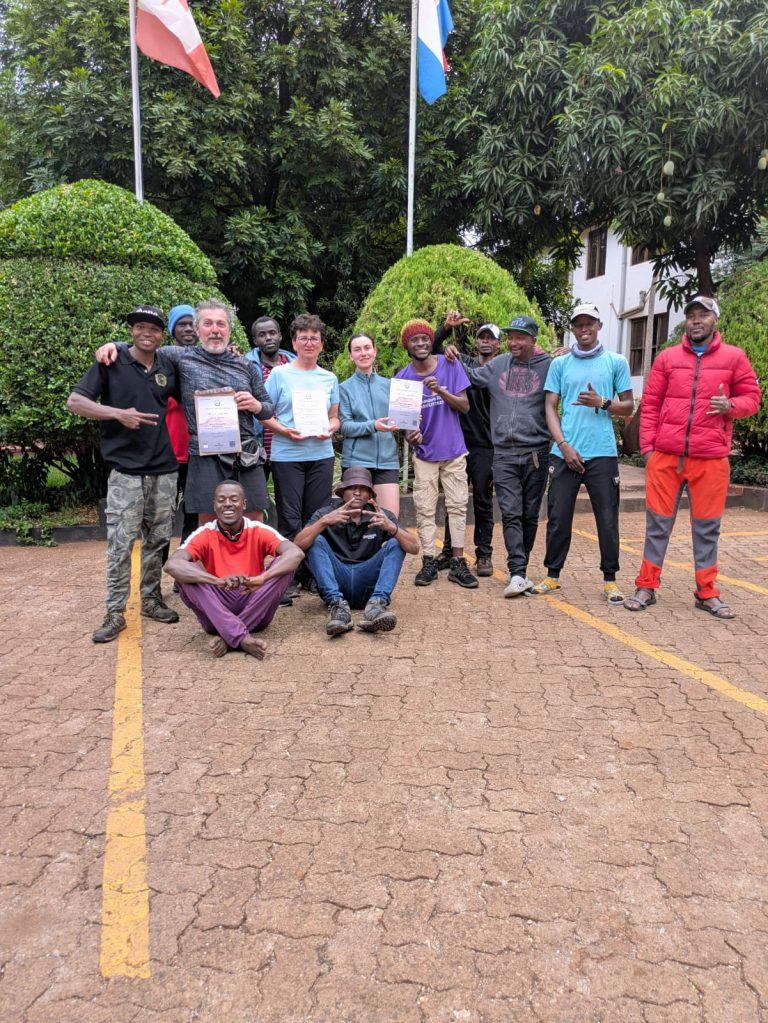
Congratulations on conquering Mount Kilimanjaro!
Lemosho Route – Frequently Asked Questions
Why choose the Lemosho Route to climb Mount Kilimanjaro?
The Lemosho Route is widely considered the most beautiful path on Mount Kilimanjaro. It offers panoramic views from multiple sides of the mountain, a remote and pristine rainforest start, and an excellent acclimatization profile that contributes to a very high summit success rate.
How difficult is the Lemosho Route?
The Lemosho Route is rated as moderate. Although it is longer in distance, the gradual ascent helps your body adjust to the altitude more efficiently than steeper options like the Umbwe Route. It is physically demanding but highly achievable for fit and motivated trekkers.
How long does the Lemosho Route take?
The recommended itinerary is 8 days, offering the best acclimatization and highest success rates. A 7-day version also exists, but the extra day on the 8-day Lemosho Route significantly improves comfort and reduces altitude-related fatigue.
What is the success rate of the Lemosho Route?
The Lemosho Route typically achieves an 85–90% summit success rate on the 8-day itinerary. Its natural “climb high, sleep low” structure is one of the strongest among all Kilimanjaro routes.
Is the Lemosho Route crowded?
The Lemosho Route provides an excellent balance: the first days on the western slopes are remote, quiet, and scenic. From day 4 onward, it merges with the Machame Route, meaning the second half of the trek is busier.
When is the best time to climb the Lemosho Route?
The best periods for the Lemosho Route are during the dry seasons: June–October and December–February. Because the route begins deep in the rainforest zone, it is especially important to avoid the heavy rains of April and May to keep the trail safe and comfortable.
Will I see wildlife on the Lemosho Route?
Yes. The Lemosho Route is known for wildlife sightings, especially at the start. Trekkers often see Blue Monkeys, Black-and-White Colobus Monkeys, and a wide variety of bird species. Occasionally, buffalo or elephant tracks appear on the Shira Plateau.
Is the Lemosho Route good for acclimatization?
It is excellent for acclimatization. The Lemosho Route naturally incorporates the “climb high, sleep low” principle—hiking up to Lava Tower and descending to sleep at Barranco Camp—plus a gentle start that allows the body to adjust gradually.
How cold does it get on the Lemosho Route?
Summit night temperatures typically drop to –10°C or lower with wind chill. The first two days, however, are usually warm and humid in the rainforest before you reach the cooler moorland and alpine zones.
What is included in a Kilimanjaro Joy Travel Lemosho climb?
Typical inclusions: airport transfers, park & camping fees, professional mountain guides, porters, full-board meals during the trek, tents, hot drinks, oxygen cylinder / emergency support, summit certificate, hotel accommodation in Moshi (before and after the trek, included but can be removed if not needed).