Climb Kilimanjaro via the
Machame Route,
7 Days trip
Why Choose the Machame Route?
The Machame Route, also known as the “Whiskey Route”, is one of the most scenic and popular trails on Mount Kilimanjaro. It offers excellent acclimatization, dramatic landscapes, and a higher summit success rate compared to shorter itineraries. From lush rainforest to alpine deserts and icy glaciers, you’ll experience a remarkable diversity of ecosystems and breathtaking views throughout your journey.Route Highlights
- Excellent acclimatization profile with gradual altitude gain
- Diverse scenery — from rainforest to glaciers
- High summit success rate compared to shorter routes
- Popular and well-established trail with good facilities
Why Trekkers Love It
Ideal for adventurous trekkers with a good fitness level, the Machame Route combines challenge, beauty, and a strong sense of accomplishment. It’s perfect for those seeking a classic Kilimanjaro climb and the chance to reach Uhuru Peak through one of the mountain’s most iconic routes.7 Days Machame Route Itinerary
All Kilimanjaro itineraries are fully customizable.
Daily schedules can be adjusted based on your group’s acclimatisation, physical condition, oxygen levels, and pace.
Your safety and comfort are our top priority, and our experienced guides may modify the route at any time to ensure a responsible and successful summit.
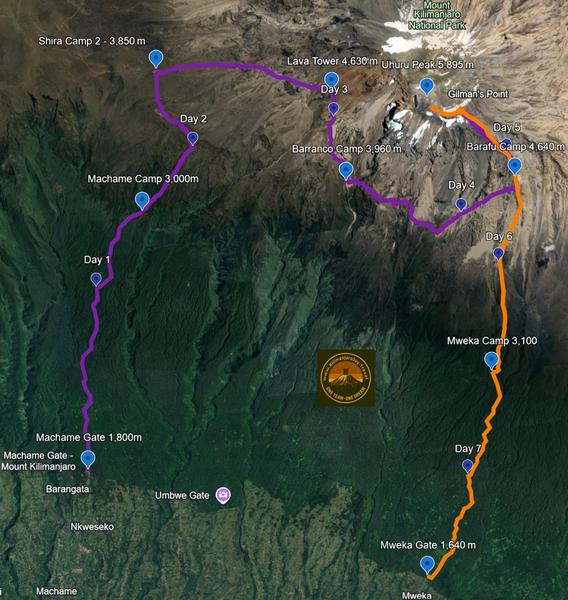
🗓️ Day 1
📍 Moshi → Machame Camp
🏔️ Elevation: 1,800m → 3,000m
🚶 Distance: ~11 km
⏱️ 5–7 hours
🌿 Highlight: Rainforest & Wildlife
After breakfast at your hotel in Moshi, we’ll drive you to Machame Gate, the entry point to Kilimanjaro National Park. After registration, your trek begins through a beautiful and humid rainforest trail. Expect sightings of exotic birds, monkeys, and vibrant flora. You’ll stop for a packed lunch midway and continue to Machame Camp, where you’ll spend your first night under canvas.
📅 Day 2 – Machame Camp → Shira Camp
🏔️ Elevation: 3,000 m → 3,850 m
🚶 Distance: ~5 km
⏱️ 4–6 hours
🌄 Terrain: Heather & Moorland zone, views of Kibo and Shira peaks
🌅 Highlight: Sunset over the Shira Plateau
🏕️ Camp: Shira Camp
📜
Today’s trek continues through the heather and moorland zone. As the landscape opens up, you’ll enjoy expansive views of Kibo and Shira peaks. You’ll arrive at Shira Camp, located on a rocky plateau with incredible sunset vistas and a clear view of the summit peak ahead.
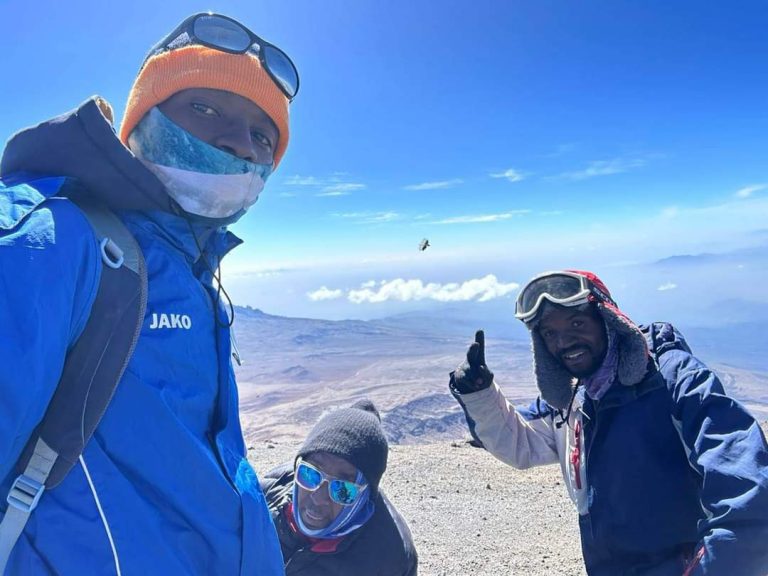
📅 Day 3 – Shira Camp → Lava Tower → Barranco Camp
🏔️ Elevation: 3,850 m → 4,630 m → 3,960 m
🚶 Distance: ~10 km | ⏱️ 6–8 hours
🧗 Strategy Day: “Climb high, sleep low” – acclimatization
🌋 Highlight: Lunch break at Lava Tower, descent into the Barranco Valley
🏕️ Camp: Barranco Camp (views of the iconic Barranco Wall)
📜
A crucial day for acclimatization. You’ll ascend gradually to Lava Tower, where you’ll have lunch and rest at high altitude. Then, descend into the beautiful Barranco Valley, home to the iconic Barranco Wall. This climb-high-sleep-low approach helps your body adapt and significantly increases your chance of a successful summit.
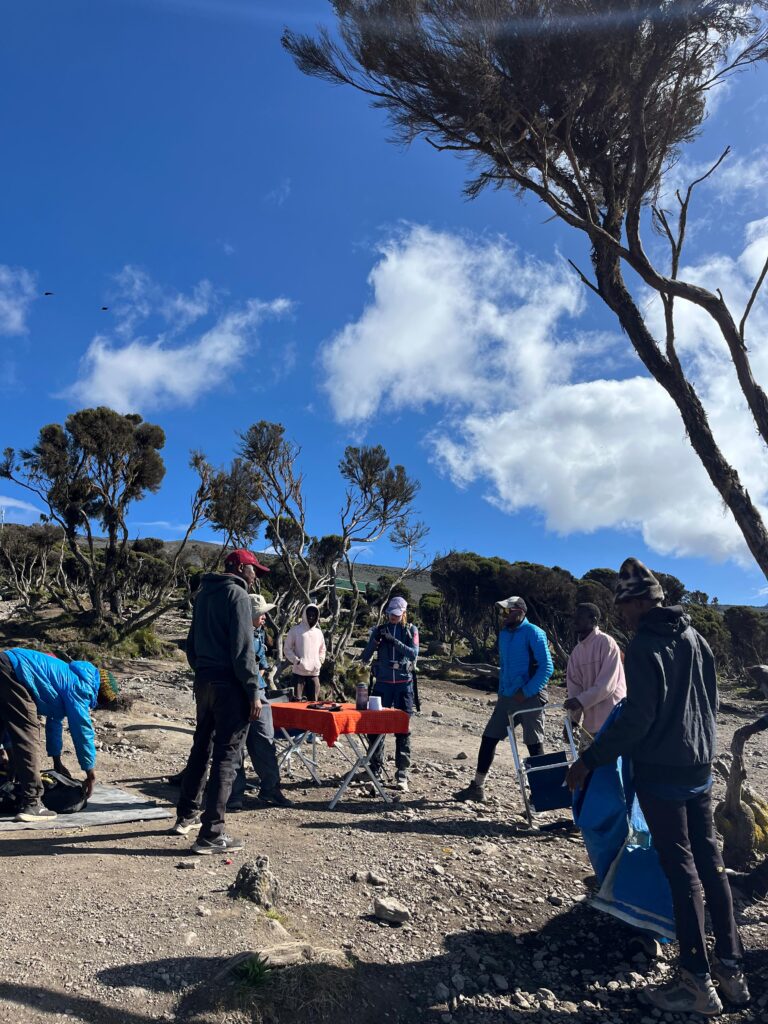
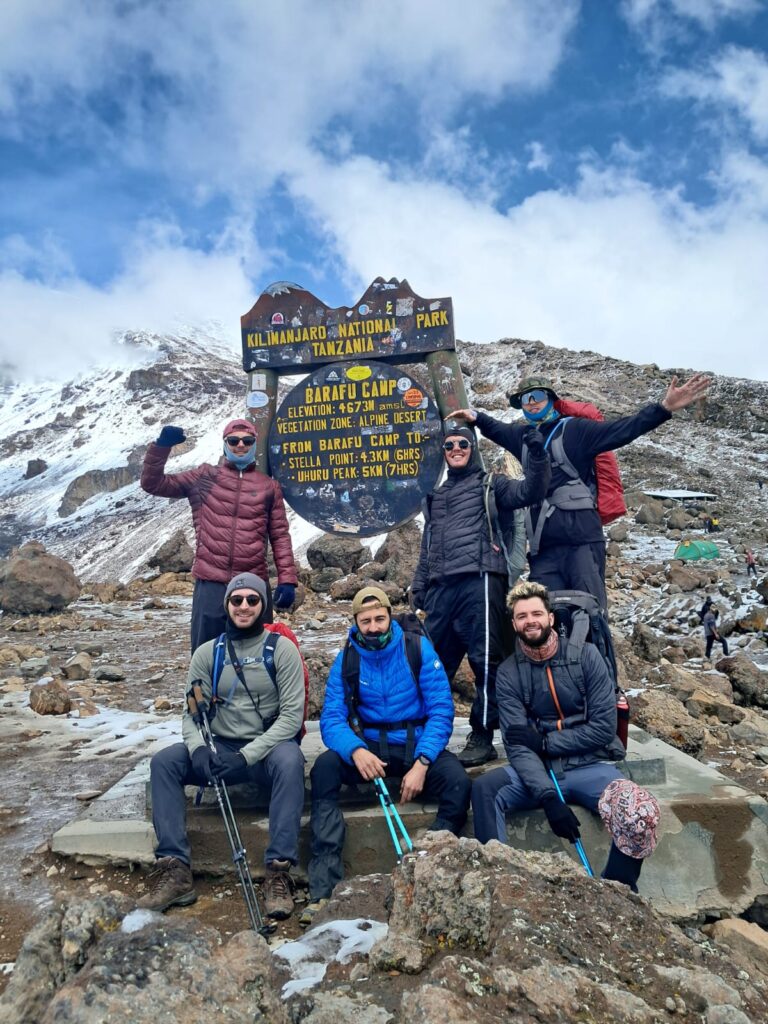
📅 Day 4 – Barranco Camp → Barafu Camp
🏔️ Elevation: 3,960 m → 4,640 m
🚶 Distance: ~9 km | ⏱️ 6–8 hours
🧗 Focus: Climbing the Barranco Wall – thrilling and scenic section
🌨️ Terrain: Glacial valleys
🏕️ Camp: Barafu Camp (summit base camp)
📜The day begins with a thrilling scramble up Barranco Wall, offering epic views and a sense of achievement. You’ll cross several glacial valleys before reaching Barafu Camp, your base camp before the summit attempt. After an early dinner, you’ll rest and prepare for a midnight start.
🏔️ Elevation: 4,640 m → max 4,800 m → return to Barafu
🚶 Distance: ~7 km | ⏱️ 1–2 hours
🩺 Purpose: High-altitude adaptation – “Climb high, sleep low”
🏔️ Views of Kibo and Mawenzi peaks
🏕️ Camp: Barafu Camp (fully acclimatized)
📜This is a standard acclimatization tactic before summit day. Rest, hydrate, and enjoy views of Kibo and Mawenzi from above Barafu. Return to Barafu for lunch, rest, and early dinner.
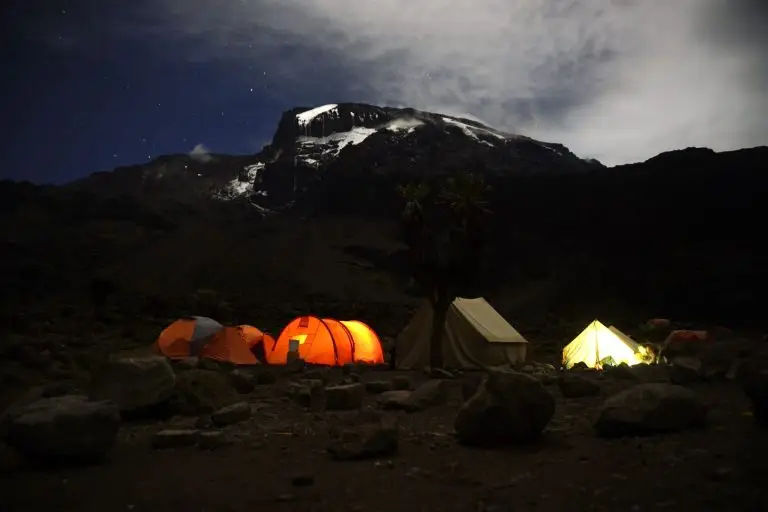
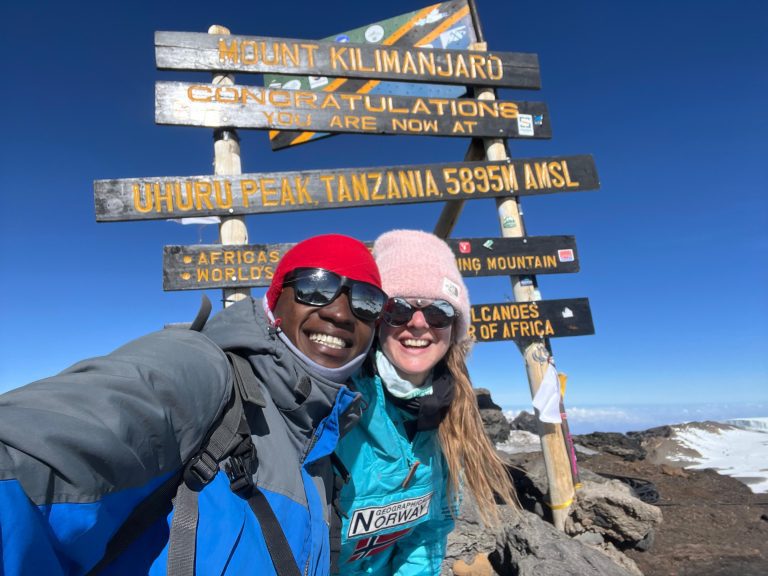
📅 Day 6 – Summit Day: Barafu → Uhuru Peak → Mweka Camp
🏔️ Elevation: 4,640 m → 5,895 m → 3,100 m
🚶 Distance: ~17 km | ⏱️ 10–14 hours
⏰ Start: Around midnight
🏔️ Summit: Uhuru Peak – Highest point in Africa
📸 Highlight: Sunrise at the summit
🏕️ Camp: Mweka Camp – well-earned rest
📜
Your guide will wake you at midnight for the final ascent. The climb to Stella Point is steep and mentally demanding but incredibly rewarding. From there, it’s a short push to Uhuru Peak, the highest point in Africa! After celebrating and taking photos, you’ll descend via the Mweka route to Mweka Camp for a well-earned rest.
📅 Day 7 – Mweka Camp → Mweka Gate → Return to Moshi
🏔️ Elevation: 3,100 m → 1,640 m
🚶 Distance: ~10 km | ⏱️ 3–4 hours
🌿 Finish: Descent through rainforest
🎉 Celebration: Summit certificates, transfer back to Moshi, hot shower & festive dinner
📜
Descend through the rainforest, enjoying your last moments on the mountain. At Mweka Gate,
Celebrate summit certificates and share tales of lunar grandeur.
Transfer back to the hotel in Moshi, where a hot shower and celebratory hot meal.
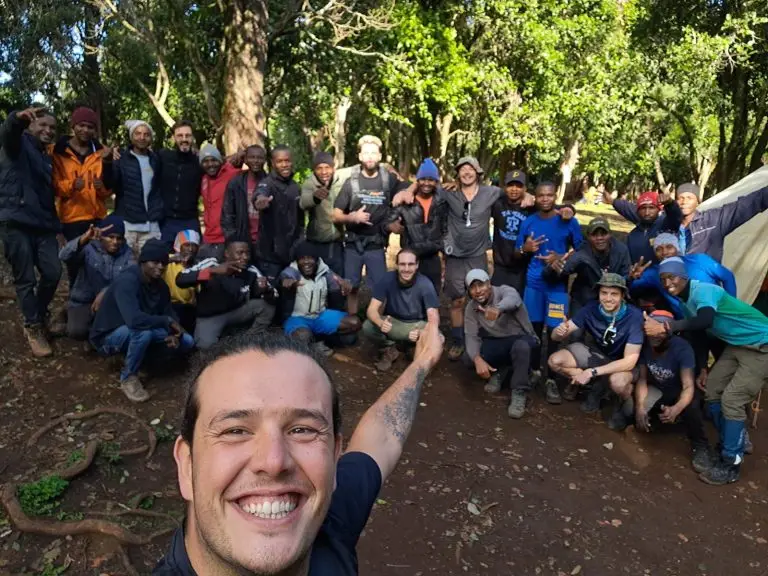
Congratulations on conquering Mount Kilimanjaro!
Machame Route – Frequently Asked Questions
Why choose the Machame Route to climb Mount Kilimanjaro?
The Machame Route on Mount Kilimanjaro combines excellent acclimatization, diverse scenery, and a high summit success rate, making it one of the best Kilimanjaro climbs.
How difficult is the Machame Route?
The Machame Route is moderate to challenging. With proper preparation, it’s suitable for fit beginners and experienced hikers.
How long does the Machame Route take?
The 7-day itinerary is ideal for acclimatization and summit success. A 6-day option exists but is not recommended due to faster altitude gain.
What is the success rate of the Machame Route?
The 7-day Machame Route has an average summit success rate of 85–90%, making it one of the most reliable Kilimanjaro routes.
Is the Machame Route crowded?
It’s popular, especially during peak season, but traffic is manageable and campsites are spacious, offering a good trekking experience.
When is the best time to climb the Machame Route?
June–October and December–February provide the most stable weather for climbing Machame.
Will I see wildlife on the Machame Route?
Yes. Most wildlife is seen in the rainforest zones at the beginning and end of the trek.
Is the Machame Route good for acclimatization?
Yes. Its profile allows safe altitude adjustment, making it ideal for climbers seeking a high summit success rate.
How cold does it get on the Machame Route?
Summit temperatures can drop below –10°C. Proper thermal multi-layering is essential.
What is included in a Kilimanjaro Joy Travel Machame climb?
Typical inclusions are airport transfers, park fees, camping fees, professional guides, porters, full-board meals, tents, hot drinks, emergency gear, and a summit certificate, hotel accommodation in Moshi (before and after the trek, included but can be removed if not needed).
Life’s short — make this the trip your bucket list was waiting for.